
By Shannon Bussnick, LSW
What will they be when they grow up?
Are they reaching their potential?
How are their classmates performing?
Oftentimes we get so caught up about how our children are “performing” academically that we neglect to remember: they’re still kids.
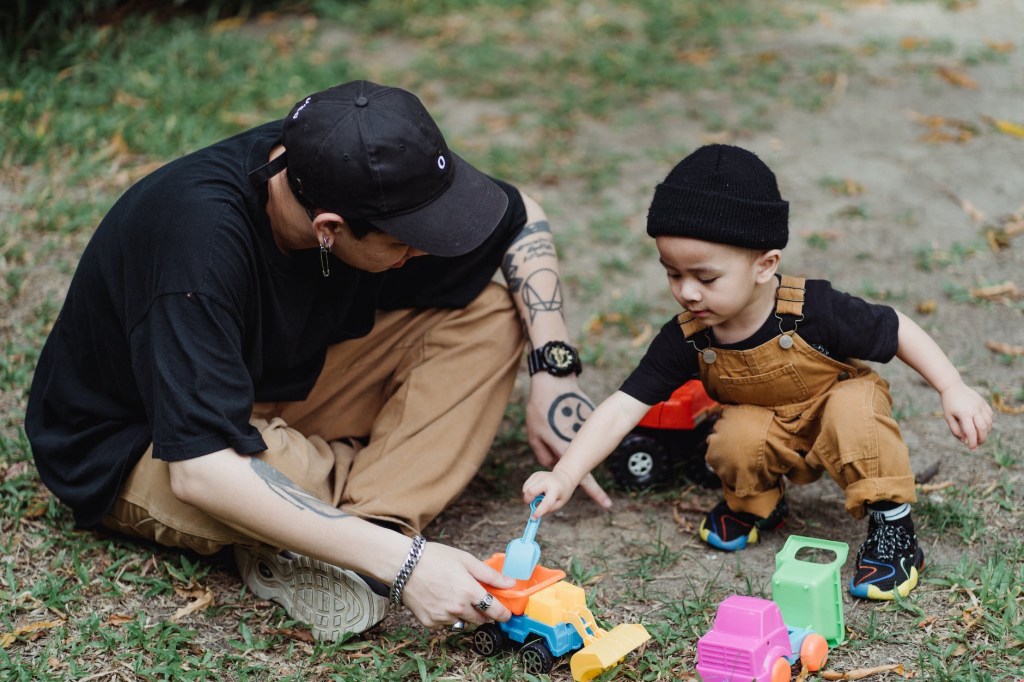
Just as adults require time to unwind, explore interests and hobbies, or engage in self-care practices, so do our children. Although it’s generally preferred that our children gain the necessary educational tools in order to be “successful” down the road, it’s just as important for them to engage in play activities along the way.
We have to remember that success is subjective. Not only can it be measured by academic performance, but also by the way children relate to themselves, their peers, and the world around them. Utilizing and encouraging play activities for kids not only sets the stage for a flexible environment to transpire that’s conducive for strengthening the imagination, but also impacts how they build character, explore their personality, and gain confidence.
Per the Journal of the American Academy of Pediatrics (AAP), “Play is essential to development because it contributes to the cognitive, physical, social, and emotional well-being of children and youth”
(Ginsburg, 2007).
Engaging in play activities can impact our children’s future successes just as much as learning arithmetic can; the key is to demonstrate how education and play can co-exist—and if balanced well, will do wonders for a child’s development and overall well-being. Think…critical thinking meets creative thinking!

Obstacles of Child-Centered Play
If you’re wondering why child-centered play is on a decline, there are a few factors worth mentioning. For one, living a fast-paced lifestyle has greatly reduced the time allotted for children to investigate, explore and discover at their own pace.
While it’s true that many families benefit from a more dynamic lifestyle, children still require time to observe their surroundings and embrace their child-like curiosities. In an era of hectic work schedules, modern-day technological advances, varying family structures, and academic-centered learning, we’re seeing limited opportunities for child-centered play (Ginsburg, 2007); as a result, children are not reaping the lifelong benefits that play has to offer.
Benefits of Play Activities
The benefits of focusing on play activities are unending and can be everlasting for a child’s development: physically, emotionally, socially, and cognitively. While some people see only sand in a sandbox, others see depths of learning opportunities ready to be sifted through. Our children deserve to explore their self-determination, learning through play in all environments they encounter—safely speaking, of course.
Here are a few suggestions you can use to encourage your child to get started (if they even need any at all!):
- Practice jump-rope or passing a soccer ball around with a friend or family member.
- Have a parent or caretakers prepare a “sensory bin.” Choose a base, like dried pasta or kinetic sand, and add some items: fake insects, silk scarves, or jellybeans are perfect. Some children enjoy using their senses to create mini games or challenges for themselves.
- Start a game of “I Spy” or pull out some old matching games.
- Get creative with crayons, paint, stickers, or chalk. (Remember to have a smock handy!)
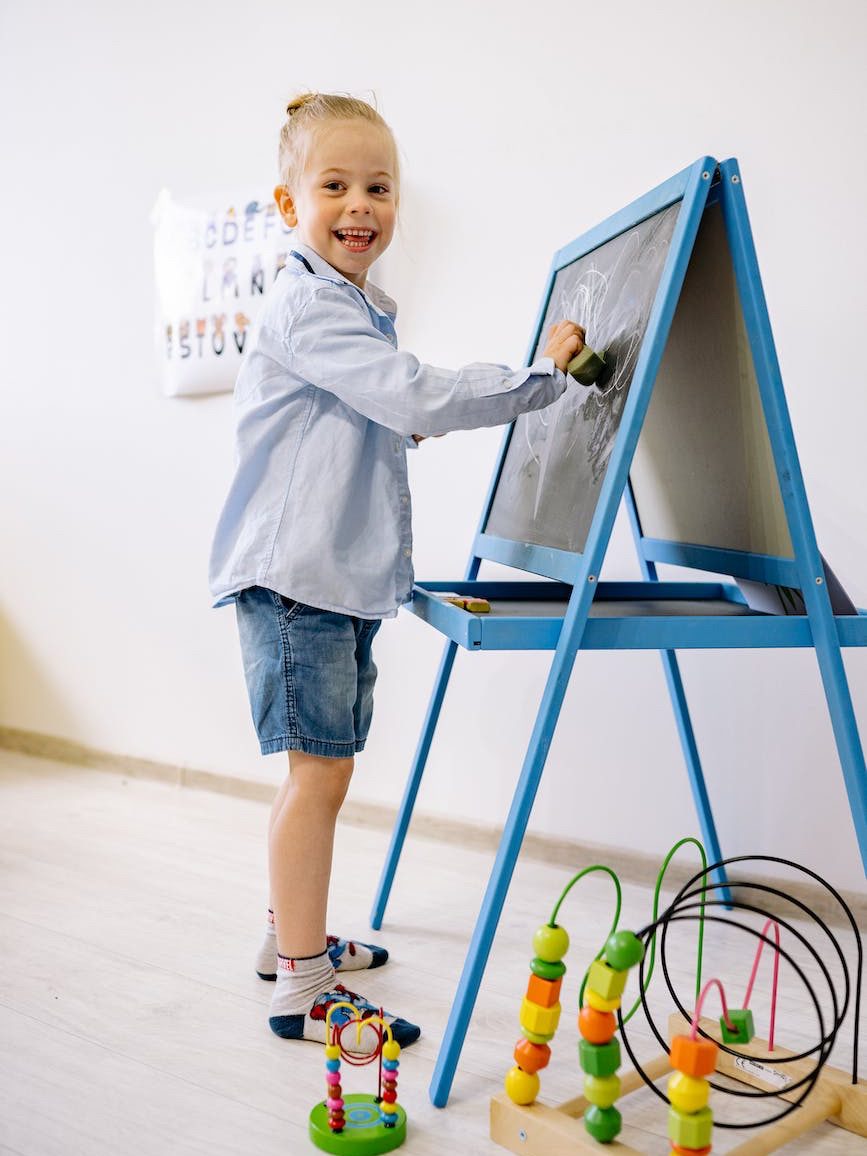
So next time we find ourselves wondering if our children are reading well enough, using the proper punctuation, or developing an age-appropriate vocabulary, remember that those things are only one piece of the puzzle. Children learn and develop at different rates and as a result of unique experiences. The road to success is not linear. Ideally, the goal is to provide our children with a well-rounded childhood experience—one that nurtures creativity and individuality and promotes the importance of play activities alongside academics.
References
Ginsburg, K. R. (2007, January 1). The Importance of Play in Promoting Healthy Child Development and Maintaining Strong Parent-Child Bonds. American Academy of Pediatrics. https://pediatrics.aappublications.org/content/119/1/182
The Genius of Play. (n.d.). 6 Benefits of Play. The Genius of Play. https://thegeniusofplay.org/tgop/benefits/genius/benefits-of-play/benefits-of-play-home.aspx
nidirect. (n.d.). How play helps children’s development. https://www.nidirect.gov.uk/articles/how-play-helps-childrens-development
 Vienna Lane
Leave a comment