By: Shannon Bussnick, LSW and mom of three ♥︎
As a mother of a four-year-old daughter and two-year-old twins, I often find myself in the midst of their playful (and messy) explorations. Recently, my four-year-old has shown a top-tier interest in my “makeup routine,” and that of her favorite princesses, eagerly watching and wanting to participate. Her two-year-old twin siblings also like to join in the fun, turning our home into a pretty fabulous layout of DIY: kids edition.
Still, navigating these moments, I often wonder if this early exposure to makeup will shape how they feel about and use makeup in the future.
And so, the questions flood in.
Are they too young to know the ins and outs of “enhancing their features?”
Will they feel comfortable in their own skin?
How are society’s expectations surrounding beauty influencing me and what I mirror to my children?
We acknowledge that there are many different perspectives on this topic, and we want to approach it without passing judgment or making comparisons. Each family and child is unique, so opinions will vary. Our goal is to share our experiences and offer support to those seeking understanding. It’s challenging to navigate our children’s new and sometimes controversial interests, especially when it comes to things like makeup and other “grown-up” experiences. Just know that you’re not alone, even when faced with uncertain or ambiguous situations.
Below, I share my unique experience and provide insights to other mothers on how to navigate the glitter-gloss phase with understanding and support.
How Do You Talk to Your Daughter About Makeup?
As a mother, watching your daughter curiously observe your makeup routine (on the days there is one, as I’m more of a bare-faced queen these days) can be both heartwarming and a little daunting. It’s important to approach these moments with understanding and support. Talking to your daughter about makeup involves explaining that it is an artistic expression, not a necessity or a gender-specific behavior. Reinforcing the idea that her natural beauty and self-worth stem from within, not from external enhancements, will be a crucial tool for her growth and development.

Safe Makeup for Kids: What Age is Appropriate?
When it comes to allowing your daughter to experiment with makeup, safety is paramount.
Many parents wonder, “What age is appropriate for makeup?”
While there is no one-size-fits-all answer, it is generally advisable to wait until your child is older and their skin is more resilient. If you choose to allow younger children to explore makeup, opt for products that are non-toxic, hypoallergenic, and designed specifically for children.
Why Do Little Girls Want to Wear Makeup?
Children are naturally curious and love to imitate their parents. When your daughter sees you applying makeup, she may want to try it herself. This desire is often rooted in play and the joy of mimicking adult behaviors. After all, you are her favorite princess—even if she tells you otherwise!
Makeup can also be a way for children to explore their creativity and imagination. It’s important to note that while many girls grow into womanhood exploring makeup, it is not a rite of passage. Boys, too, can freely express themselves with makeup despite the outdated social norms surrounding masculinity.
Why Does My Two-Year-Old Son Like Makeup So Much?
As mentioned above, it’s not uncommon for young boys to be interested in makeup, too. This interest often stems from the same curiosity and desire to imitate that drives girls. Additionally, makeup can provide a sensory experience that some children find appealing. This phase is typically about exploration rather than a genuine interest in cosmetics. Boys should not be discouraged from experimenting with makeup due to societal norms. This phase of exploration can be a healthy and creative outlet under parental supervision.
Can Makeup Be a Sensory Issue?
Some children, though, especially those with sensory processing disorders or cognitive differences, may find makeup to be overwhelming due to its textures, scents, and application process. This can be the case for kids with or without neurodivergence. In these situations, it’s important not to introduce or encourage makeup exploration if the child does not show any interest. Instead, it’s better to focus on activities that are comfortable and enjoyable for them to support their healthy growth and development. Again, every child is unique.
The Influence of Parental Behavior
Our influence as parents plays a significant role in our children’s interest in makeup. Watching mommy put on makeup before work, stepping into a skincare routine, or enjoying a spa day can all contribute to their fascination. It’s essential to model healthy behaviors and attitudes towards makeup. Explain that makeup is an optional tool for self-expression and not a requirement for feeling beautiful. Just because most girls grow into womanhood exploring makeup does not mean it is a rite of passage, nor should it be avoided as an experimentation phase for boys. Both girls and boys can freely express themselves safely under parental supervision if it’s appropriate for the family and their needs and desires. Some men also grow up to use makeup but may not speak as openly about it due to judgment and stigma from society.
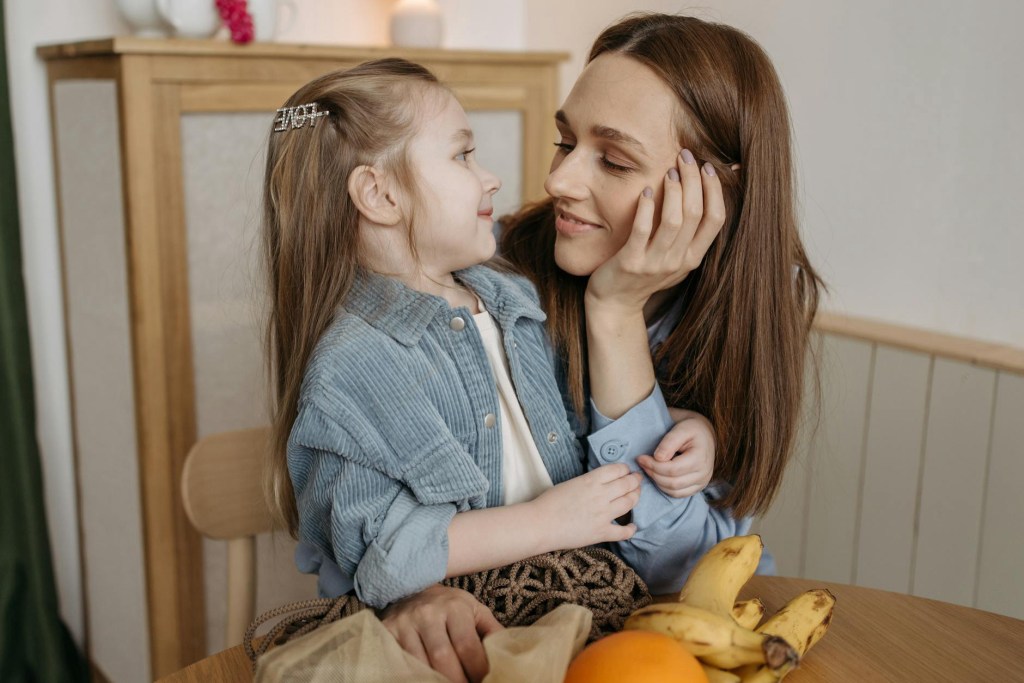
Teaching Self-Love and Respect
We want our daughters to understand early on that makeup is an expression for many people but not a path to beauty or acceptance. Beauty comes from within, and makeup should never overshadow our natural uniqueness. Teaching self-love and respect involves showing our children that confidence and self-worth are not tied to what we put on our faces.
At the same time, we don’t want to discourage or punish children for their desire to explore their faces with colors, textures, and patterns. We do not want to induce feelings of shame or insecurity about their interests. However, as parents, it is our responsibility to guide our children to respect themselves and to love the skin they’re in—whether covered in princess makeup or dressed in a superhero costume.
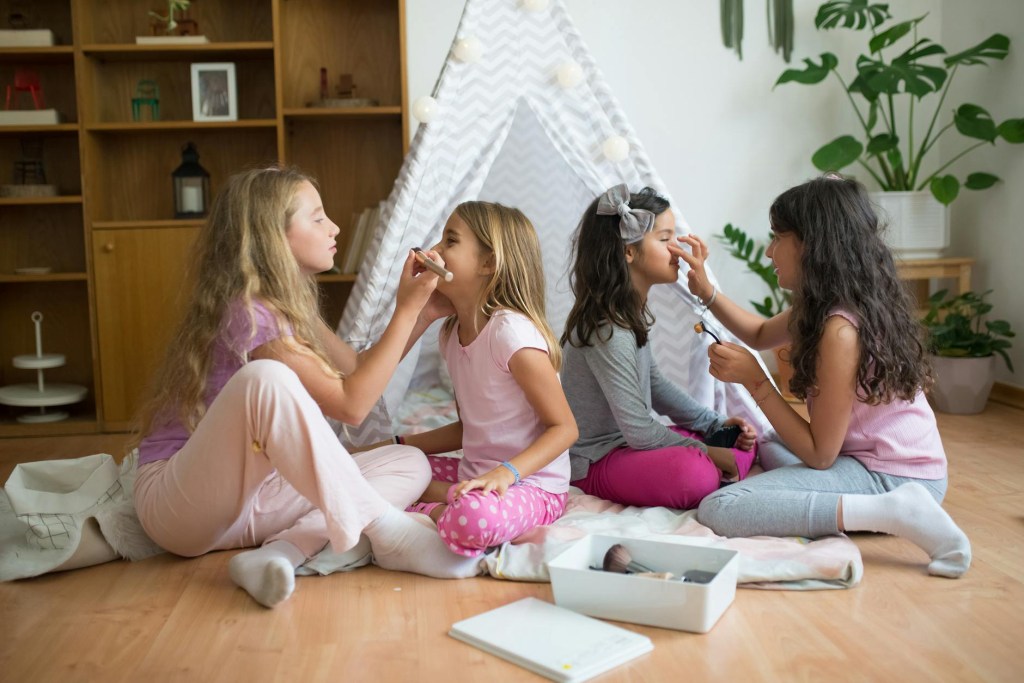
Modeling Positive Behavior
When putting on makeup, it’s important to be mindful of the way we speak to ourselves and our children.
Use positive affirmations such as “I am beautiful,” “Today, I feel inspired to be creative,” or “I wonder how this lipstick feels so smooth and hydrating on my lips.”
These affirming statements rooted in inventiveness help reinforce the idea that makeup is a form of self-expression and should not be used to determine one’s worth. Ultimately, it all begins with our mindset.
Fun and Creative Alternatives to Makeup Play
There are numerous alternatives to using cosmetic makeup that can encourage children to explore their creative side. Depending on the child and family, these alternatives may include activities that do not involve using actual cosmetic makeup or that focus more on promoting self-love and appreciation of inner beauty in children.
1. Child-Friendly Makeup Brushes
Consider purchasing child-friendly makeup brushes without the actual cosmetics. These brushes allow children to mimic your actions without applying anything to their skin. It’s a great way for them to feel involved and practice the motions. Feeling the brush on the skin can also induce a sense of calm in many children.
2. Pretend Play Sets
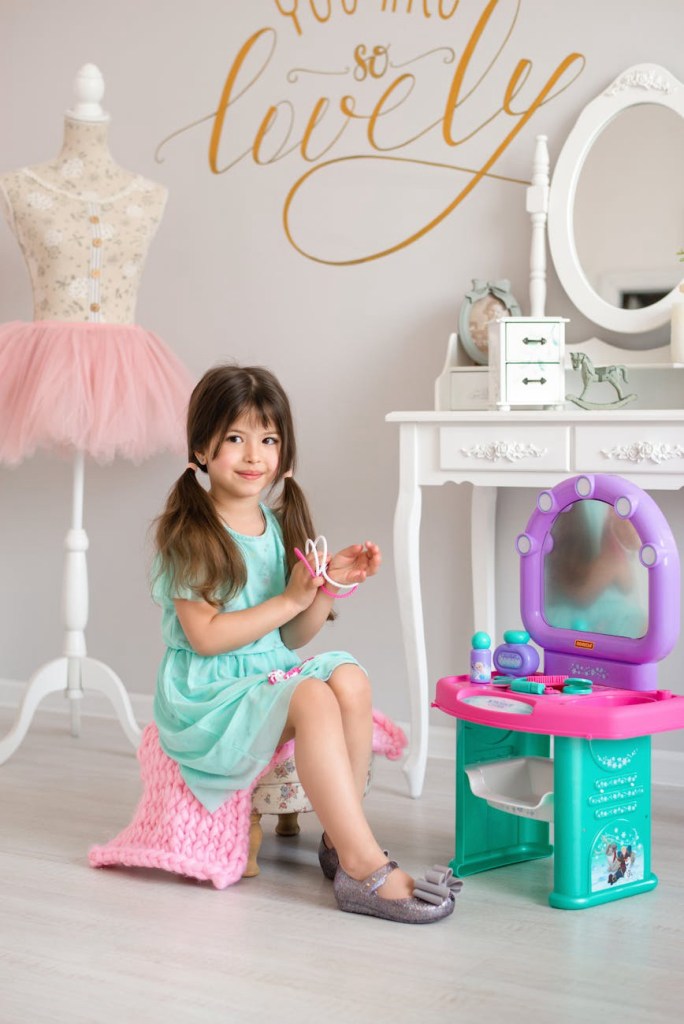
Invest in a pretend play makeup set or a Montessori-style set made with safe materials. These sets often include replicas of makeup items, providing a safe and mess-free way for children to explore.
3. Non-Toxic Nail Polish
Experiment first with non-toxic nail polish and have a mother-daughter day. Painting nails can be a fun and creative activity that allows children to express themselves without the complexities of full makeup application. Its also a great activity for hand-eye coordination.
4. Art Projects
Use cardboard cutouts or invest in a paper roll and easel kit to create faces with various assortments of makeup application. Talk about the colors and how they make your child feel, encouraging them to explore emotions and artistic expression through color.
5. Exploring Facial Features
Allow your child to explore your facial features, talking about what they like touching and seeing on your face. Share a mirror and do the same for your child. This can be a beautiful bonding experience that emphasizes self-acceptance and mutual appreciation.
6. Dress-Up Games
Incorporate dress-up games where makeup is just one part of the overall costume. This can help children see makeup as part of a larger creative process rather than the main focus.
7. Positive Affirmations
Always use positive and encouraging language enforcing inner beauty. Remind your children that they are beautiful and unique, regardless of whether they are wearing makeup or not. Encourage self-expression and creativity while reinforcing the importance of self-love and respect.
Conclusion: Approaching Children’s Makeup with Support and Understanding
Navigating your daughter’s experimentation with makeup can be quite interesting. By creating an environment of understanding and support, you can help your children view makeup as a fun and creative outlet, rather than a necessity. Remember to emphasize self-love, respect, and the importance of inner beauty while engaging in a wide range of activities with your little ones. Teaching these values starts with modeling our own behavior and attitudes towards makeup and self-worth. So when you stand behind your daughter, combing her hair and hyping her up about her natural glow, remember that you, too, embody the same.
 Vienna Lane
Leave a comment