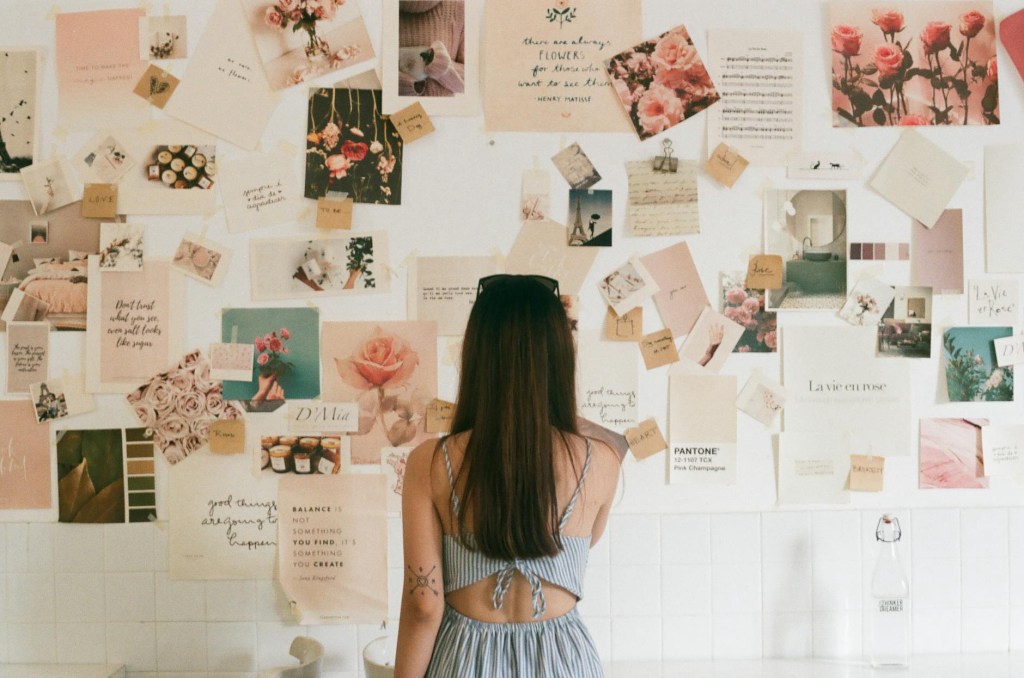
A mood board is more than just a collection of pretty pictures—it’s a powerful tool for boosting your mood, setting goals, finding inspiration, organizing ideas, and crafting strategies for success. Whether you’re focusing on mental health and wellness, motherhood, self-care, mindful living, or reaching personal goals, a mood board can be your guide. It helps bring clarity to your thoughts, connects you to your vision, and keeps you focused on the bigger picture. Because trust, there always is one!

And let’s face it, sometimes we veer off track, lose sight of our goals, and get lost in the messiness of life. Absolutely, there’s value during these seasons of life, but curating a mood board can exist to ground us and re-focus our attention when we need it most.
Here, we explore how to create a mood board that aligns with your needs and lifestyle, while keeping you energized and intentful in your daily life.
Different Types of Mood Boards and Their Purposes
Mood boards are versatile, and depending on your goals, they can take on many forms:
- Vision Boards for Goal-Setting: These boards are centered around personal or professional aspirations. You can use images, quotes, and words that represent the milestones you want to reach, whether it’s career achievements, health improvements, or family-oriented goals.
- Inspiration Boards for Creativity: These boards ignite creative ideas and inspiration for projects. If you’re a writer, artist, or simply someone needing a burst of imagination, this board can include color palettes, imagery, quotes, and textures that speak to your creative goals.
- Organization Boards for Mental Clarity: Perfect for those who thrive on structure, these mood boards help with managing tasks, streamlining thoughts, and staying organized with motherhood or work-life balance. They can be digital or physical, featuring checklists, motivational quotes, or simple images that help maintain calm and order.
- Wellness Boards for Self-Care: Focused on mental health and mindful living, these boards serve as reminders of the importance of balance and taking time for yourself. Think calming colors, affirmations, and visual prompts to practice mindfulness, yoga, or other self-care routines.
Choosing the Medium: Physical or Digital Mood Boards
Deciding whether to create a physical or digital mood board depends on your preference and how you intend to use it. Mediums for mood boards can include:
- Physical Mood Boards: These are tangible and give you the opportunity to feel and arrange materials. You can use a corkboard, canvas, or even a large notebook. Gather magazines, print images, and find tactile elements like fabric swatches or leaves to enhance the experience. It offers a more personal and creative process and can serve as a beautiful focal point in your space.
- Digital Mood Boards: If you prefer technology, digital mood boards are easy to create using platforms like Pinterest, Canva, or a simple folder on your desktop. The advantage here is endless access to resources online, and you can update or change your board frequently. It’s also more convenient if you’re constantly on the go or prefer not to use physical supplies.
How to Start and Stay Focused
Creating a mood board is all about setting the right tone and staying true to your goals. Here’s how to get started:
- Identify Your Purpose: Before starting, ask yourself why you’re creating this mood board. Are you trying to set goals for your wellness journey? Seeking inspiration for a project? Looking to organize your chaotic thoughts? Knowing your purpose will help guide your choices.
- Gather Your Resources: Whether physical or digital, start gathering images, quotes, colors, textures, and anything that resonates with your vision. Be selective—choose items that reflect your true ideas and feelings, not what you think should go on the board. This ensures you stay focused and don’t overwhelm yourself.
- Choose a Style and Color Palette: Style and color can impact how you connect with your board. Soft, muted tones may encourage calm and relaxation, while bold, vibrant colors can energize and motivate. Think about the feelings you want your board to evoke and use that as a guide.
- Organize Intentionally: Don’t let the process become chaotic. Arrange your board in a way that makes sense to you. You can divide sections for different themes or goals, or simply let the visuals flow in a way that feels natural. This organization helps keep your thoughts clear and focused.
Substance and Objectives: What’s the Purpose of Your Mood Board?
Your mood board can be more than just a visual representation; it can also be attached to specific objectives or be a broader, cumulative strategy for life. Here are some ways you can give it purpose:
- Goal-Oriented Boards: If you’re using your mood board to meet a specific goal, like launching a business or improving your mental wellness, tie each visual element to a step you need to take. Use images or words that represent milestones and progress points. This will serve as a daily reminder to stay on track and motivated.
- Inspiration Boards for Long-Term Visions: Sometimes a mood board is about collecting ideas that fuel your long-term dreams. These are less about specific goals and more about setting a tone for your life or a project. It’s an ongoing, evolving process that helps keep your vision alive as you add or remove elements based on where you’re headed.
- Wellness and Check-In Boards: Use your mood board as a tool to measure success or to check in on your feelings. Maybe you’ll revisit it weekly to see how aligned you are with your vision. It could also be used monthly or quarterly to assess whether you’ve made progress toward your goals or if your ideas have shifted.
Staying True to Yourself While Avoiding Chaos
The most important aspect of creating a mood board is to remain true to your vision while avoiding unnecessary chaos. It’s easy to feel overwhelmed with too many ideas, but staying focused will help you remain energized and intentful. Here’s how:
- Limit Distractions: When building your board, focus on what truly resonates with your goals and feelings. Don’t add elements that seem trendy or popular if they don’t connect with your personal vision.
- Use It as a Guide, Not a Rulebook: While a mood board is an amazing tool to help clarify and organize your thoughts, remember that it’s there to inspire you, not to box you in. Allow flexibility so that your board evolves as you do.
- Revisit and Reflect: Make time to revisit your board. If something no longer aligns with your goals, remove or replace it. Stay engaged with your mood board so it remains a living reflection of where you’re headed.
Making Your Mood Board a Part of Your Daily Life
Now that your mood board is complete, how often should you use it? This depends on your objectives. Here are a few options:
- Daily Motivation: If your mood board is tied to specific, short-term goals, use it daily to stay focused and energized. It can serve as a quick reminder each morning of what you’re working toward.
- Weekly or Monthly Check-Ins: For mood boards that represent bigger, long-term visions, it might make sense to check in weekly or monthly to evaluate your progress and realign your intentions.
- A Long-Term Vision: Your mood board can also act as a cumulative strategy that you revisit a few times a year. This works well if you’re tracking progress in wellness, motherhood, or life goals and want to keep a broader sense of where you’re headed.
Turn Your Dreams Into Reality
Creating a mood board is a simple but powerful way to stay aligned with your intentions, whether you’re striving for balance in motherhood, mental health, or working to achieve a lifelong goal. It gives you clarity, focus, and the energy needed to bring your dreams to life. By staying true to yourself and your vision, while organizing your ideas in a non-chaotic way, you can use your mood board as a tool for success. Keep it evolving, check in often, and trust the process—it’s a visual reflection of the path you’re meant to take.


Leave a reply to Chasing the Right Idea: Navigating the Shaky Place Between Inspiration and Invention Cancel reply