
By: Shannon Bussnick, LSW

Trigger Warning: This content contains descriptions of insect phobias, specifically the fear of bees and wasps, which may be distressing to some readers.
Insect Phobia—My Personal Experience
I can’t recall a specific time when I was stung by a bee or bitten by a spider. Surely, it must have happened in my 35 years of life, but just the mere thought of these creatures grazing my skin sends a shiver down my spine. I am not so much afraid of the actual sting, but rather the creature itself—the way its body moves, the texture of its wings, and the ominous presence of its stinger. The sight of a bee buzzing around, with its tiny yet formidable form, triggers an overwhelming sense of dread and panic that I cannot always fully explain or justify. So, even though I can’t recall any specifics where I was harmed by these insects, my fear of bees and wasps has been intense since adolescence, far surpassing my discomfort around other insects or rodents. This personal experience, shared also by many, is a prime example of how a phobia can manifest in our lives. But there is hope.
Below, we explore how phobias develop and review successful treatment options for those looking to live freely without constant fear weighing them down.
What is a Specific Phobia?
A specific phobia is an intense, irrational fear of a particular object or situation that poses little or no actual danger. According to the DSM-5 (Diagnostic and Statistical Manual of Mental Disorders), phobias are classified under anxiety disorders and can be broken down into several categories, including:
- Animal phobias: Fear of specific animals, such as insects, dogs, or snakes.
- Natural environment phobias: Fear of natural events like storms, heights, or water.
- Situational phobias: Fear of specific situations like flying, driving, or enclosed spaces.
- Blood-injection-injury phobias: Fear of blood, injury, or medical procedures.
Most Common Phobias: Statistics and Insights
Phobias are a widespread issue, affecting millions of people globally. Here are some of the most common phobias, supported by statistics:
Arachnophobia (Fear of Spiders)
- Affects approximately 3.5% to 6.1% of the global population.
- More common in women than men.
Ophidiophobia (Fear of Snakes)
- Affects about 2% to 3% of the population.
- Considered one of the top evolutionary fears due to the potential danger of venomous snakes.
Acrophobia (Fear of Heights)
- Impacts around 5% of people.
- Can lead to significant avoidance behavior and anxiety when faced with heights.
Agoraphobia (Fear of Open or Crowded Spaces)
- Affects approximately 1.7% of adolescents and adults in the U.S.
- Often associated with panic disorder and can severely impact quality of life.
Claustrophobia (Fear of Enclosed Spaces)
- Affects an estimated 5% to 7% of the population.
- Can trigger intense panic attacks in confined areas such as elevators or small rooms.
Cynophobia (Fear of Dogs)
- Affects about 3% to 7% of the population.
- Often results from a traumatic encounter with a dog during childhood.
Statistical Insights
- According to the National Institute of Mental Health (NIMH), specific phobias affect approximately 12.5% of U.S. adults at some point in their lives.
- Women are more likely than men to develop phobias, with about twice the prevalence rate.
- Phobias typically begin in childhood, adolescence, or early adulthood, often persisting if not treated.
Fear vs. Debilitating Phobia: Knowing the Difference
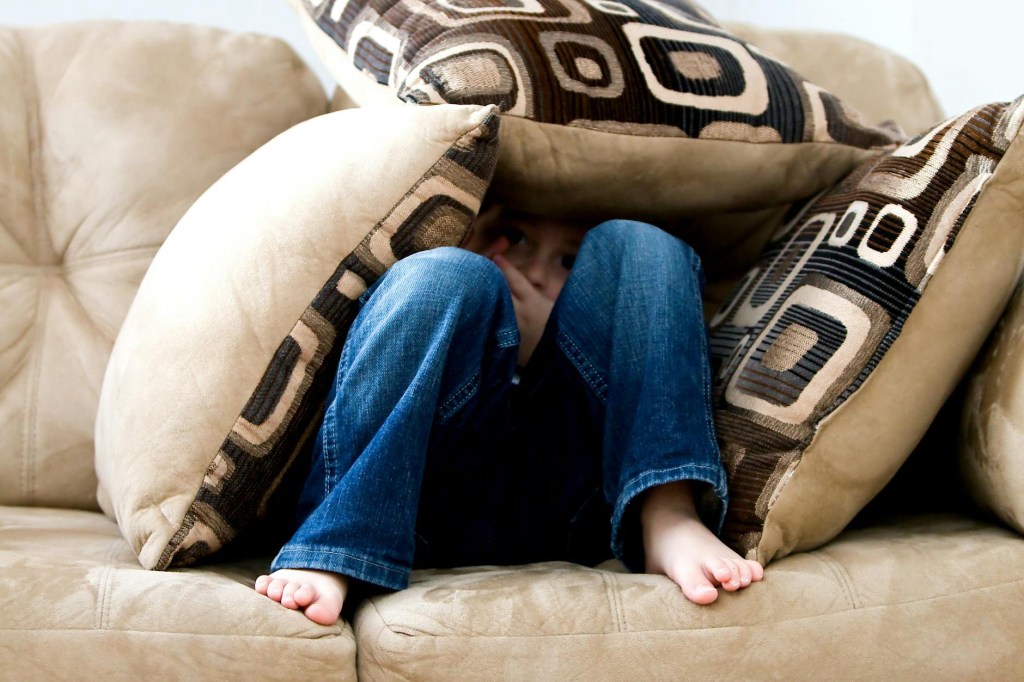
It’s normal to experience fear in certain situations, like seeing a bee buzzing around the picnic table or a garden snake sunning itself on your doorstep. However, a phobia is characterized by an excessive and persistent fear that leads to avoidance behaviors and significant distress.
The difference lies in the intensity and impact on daily life. While a typical fear might cause discomfort, a phobia can lead to panic attacks, avoidance of outdoor activities, and even impact one’s career or social life.
How Phobias Develop: Theories and Triggers
Phobias often develop in childhood or early adolescence, though they can emerge at any age. The exact cause of phobias is not always clear, but several factors can contribute:
- Genetic predisposition: A family history of anxiety disorders may increase the risk.
- Environmental factors: Traumatic experiences, such as witnessing someone being stung by a bee, can trigger a phobia.
- Learned behavior: Observing others’ fearful reactions can lead to the development of similar fears.
Interestingly, some individuals, like myself, may not remember a specific traumatic incident but still experience an intense phobia. This often suggests that a combination of factors, including biological and psychological predispositions, plays a role.
Co-Occurring Conditions
Phobias often coexist with other mental health conditions, such as:
- Generalized Anxiety Disorder (GAD)
- Obsessive-Compulsive Disorder (OCD)
- Panic Disorder
- Depression
- Substance Use Disorders
These co-occurring conditions can exacerbate phobia symptoms or lead to other mental health challenges, making it more difficult to manage.
Common Treatments and Success Rates
The good news is that phobias are highly treatable. Common treatments include:
- Cognitive Behavioral Therapy (CBT): This therapy helps individuals reframe their thoughts and responses to the feared object or situation. Success rates are high, with many people experiencing significant improvement.
- Exposure Therapy: A type of CBT where patients are gradually and systematically exposed to the phobic stimulus in a controlled environment, helping them build tolerance.
- Medications: Anti-anxiety medications or antidepressants may be prescribed to manage symptoms, but they are not a cure on their own. Beta-blockers have also been used to block the effects of adrenaline on the nervous system. However, many medications used to treat phobias are not FDA-approved and are used off-label. Therefore, they must be thoroughly discussed with your provider before starting a regimen.
The Brain’s Response to Phobias
Phobias are believed to involve the amygdala, a part of the brain responsible for processing fear. When faced with a phobic stimulus, the amygdala triggers the “fight or flight” response, releasing stress hormones like adrenaline. Over time, this response can become conditioned, making the fear response more automatic.
Alternative Treatments and Emerging Research
In recent years, alternative treatments like virtual reality exposure therapy and even psychedelic-assisted therapy have been explored. While not yet widely approved, these treatments show promise in helping rewire the brain’s response to fear.
Moving Forward: Hope and Resilience
Overcoming a phobia is a journey, but it’s important to know that progress is possible. For some, the fear may never fully disappear, but learning coping strategies can significantly reduce its impact. For others, the phobia may diminish to the point where it no longer affects daily life. Seeking professional mental health care is crucial, as a trained mental health professional can guide you through the process.
Our Final Thoughts
Living with a phobia can be challenging, but you’re not alone. Understanding your phobia, exploring treatment options, and maintaining hope are key steps in your journey to a less fearful life. Remember, it’s not just about overcoming the phobia but also about building resilience and finding peace.
References
- American Psychiatric Association. (2013). Diagnostic and Statistical Manual of Mental Disorders (5th ed.). Arlington, VA: American Psychiatric Publishing.
- National Institute of Mental Health. (2020). Anxiety Disorders. Retrieved from NIMH
- National Institute of Mental Health. (n.d.). Specific phobia. Retrieved from NIMH
- Mayo Clinic. (2021). Phobias. Retrieved from Mayo Clinic


Leave a reply to The Mind’s Eye: Understanding Illusions and Mental Health Cancel reply